

When choosing bed linen or a mattress cover, we often hear about the count threads per square centimeter. This figure is even sometimes considered a guarantee of quality. But in the case of anti-dust mite, which are medical devices, it's not the threads that matters most, but the size of the fabric's pores.
It's true that a fabric made of threads can have an impressive threads per square centimeter. But that doesn't mean it filters better. Why? Because a large number of threads can be achieved… very fine count with threads very fine . And threads can leave larger pores between them. It's these very fine pores , these tiny openings between the threads, that determine the fabric's ability to trap dust mite allergens
Let's take two examples:
And yet… their anti-dust mite is identical. Why?
Because it's not the number of threads that determines performance, but the size of the fabric's pores , those tiny holes between the threads.
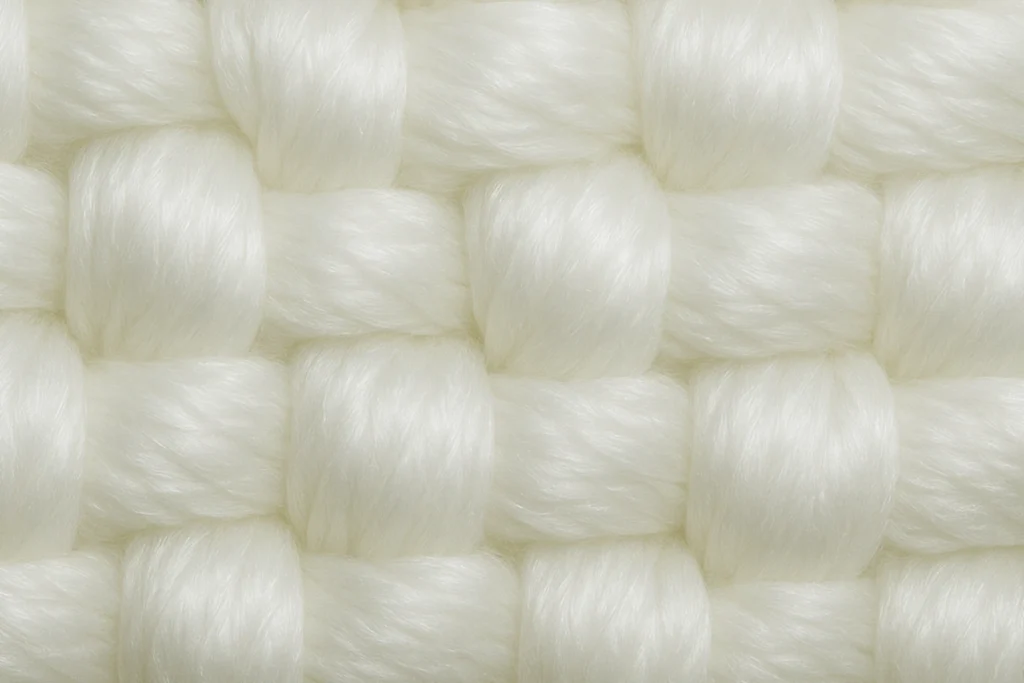
Thanks to the patented Texaal® weaving technique , all our covers have a pore size of less than 5 microns , which is much smaller than the allergenic particles of dust mites, which are generally larger than 10 microns .
To achieve this performance, we adjust the threads according to their thickness count : the yarn used in Texaal® Cotton is thicker than that of Texaal® Polyester , which explains why fewer threads are needed to provide equally effective protection .
The result: allergens cannot penetrate Texaal®, regardless of the material used or the threadsper cm².
And this effectiveness is maintained even after 100 wash and dry cycles, as confirmed by tests carried out in an independent laboratory (Test report carried out by IBT Laboratories – Now part of the Eurofins Viracor ).

Our anti-dust mite are manufactured under a quality system certified to ISO 13485:2016, the international standard specific to medical devices. This guarantees:
Beyond technical tests, clinical studies validated and published have demonstrated a reduction of more than 62%* in symptoms experienced by allergy sufferers using our anti-dust mite. This result testifies to their real-world effectiveness.
count threads can give an idea of the weave, but it's not enough to judge the quality and effectiveness of a anti-dust mite. What matters is the pore size, which determines the fabric's ability to filter allergens.